
Sound & Story: The Pump Organ
Before amplifiers, power cords, or digital sound, communities gathered around an instrument powered only by breath and feet.
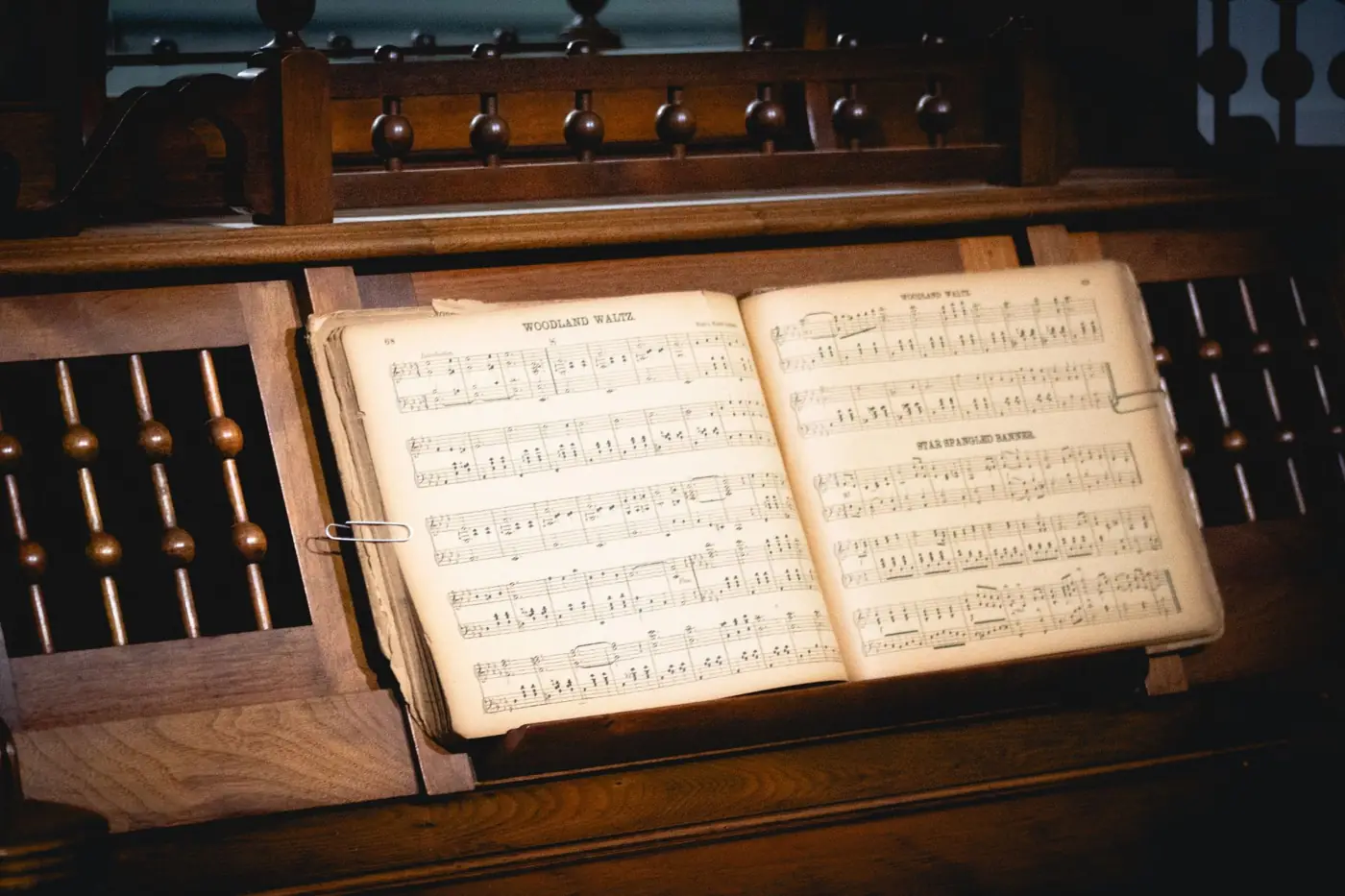
In the late 1800s and early 1900s, a pump organ was often the loudest voice in the room. With no electricity required, these portable reed organs brought hymns, marches, and parlor songs to rural churches, one-room schoolhouses, and front parlors across America. Our pump organ, now at home in the Mathews Museum, once filled a small room with music powered entirely by hands, feet, and air.
Pump organs, sometimes called reed organs or harmoniums, offered a practical alternative to expensive pipe organs. By working a pair of foot pedals, the player filled hidden bellows with air, which was then pulled across thin metal reeds each time a key was pressed. The result was a warm, sustained tone that could lead congregational singing or accompany an evening of music at home.
In communities like Mathews, where churches were small and travel could be difficult, a pump organ was often the heart of worship. It was light enough to be brought into a chapel, school, or lodge hall and sturdy enough to withstand years of use. This instrument helped generations learn hymns, patriotic songs, and simple piano pieces long before radios and record players arrived.
Look closely at the cabinet and you’ll see the craftsmanship that made these organs as much furniture as instrument. Turned wooden spindles, carved trim, and polished wood finishes brought a touch of Victorian elegance even to modest homes. Many families posed for photographs around their organ, a sign of both musical pride and economic stability.
By the mid-20th century, electric keyboards and upright pianos replaced most pump organs. Yet instruments like this one still carry the feel of a world where music was handmade—where every note required effort, breath, and the steady rhythm of two feet at the pedals.
Explore More

Step into 1776: The Battle of Cricket Hill Diorama
Experience Lord Dunmore’s last stand in Virginia through a detailed scale model of Gwynn’s Island, Fort Cricket Hill, and the waters of Hills Bay.
View exhibit →
100 Hours Beneath the Chesapeake
Before ROVs or scuba, there was Gilbert Klingel—a man who welded curiosity into steel and gave the Chesapeake a voice.
View exhibit →
Bay Quilters Guild Annual Quilt Show
Hosted by the Mathews Museum & Bay Quilters Guild
View exhibit →